Showing posts with label From The Pages. Show all posts

Monday, August 26, 2013

She’s Just Being Miley


Seems like a good day to republish this. Back in the summer of 2011, Joe Coscarelli profiled the morphing career of Miley Cyrus and explained why her cover of Nirvana's ‘Smells Like Teen Spirit’ was more appropriate than she was given credit for. 

Originally Appears in Issue 7: The Pop Issue

Of all the post-shotgun blast bastardisation guaranteed to be disrupting the stillness of Kurt Cobain’s eternal slumber – if we were to categorise such on something of a sell-out Richter scale – Miley Cyrus covering ‘Smells Like Teen Spirit’ live in concert should not even register.

In fact, she killed it – but in the good way.

The nineties anthem, released when Cyrus was minus-thirteen-and-a-half months old, made its way into the teen star’s setlist during her Gypsy Heart Tour through much of Latin America, Australia and the Philippines. Though Cyrus has three studio albums, she also led her backing band through karaoke classics like the Poison power ballad ‘Every Rose Has Its Thorn’, Fleetwood Mac’s ‘Landslide’, and a Joan Jett medley of ‘Bad Reputation’, ‘Cherry Bomb’ and ‘I Love Rock ’n’ Roll’, the latter of which is not even known to most of Cyrus’s audience as the soundtrack to Britney Spears straddling a motorcycle, but rather as a ‘Smash Hit’ in Guitar Hero.

‘Teen Spirit’ is the most inspired in selection and performance, but also the most reviled, as evidenced online, where the most-viewed video version of the cover on YouTube has gathered only 598 ‘likes’ to a caustic 4,788 ‘dislikes’, summed up in top-rated comments like, “OMG my ears are bleeding! Kurt I feel fucking sorry for you! Please dont [sic] listen! And if you heard it, I hope you can still Rest in Peace!”

Though she only plays air guitar during her version, Miley does justice to the song musically through her too-deep and too-sexy whiskey-and-cigarettes rasp, as puzzling when she speaks as when she sings and adding as much to her age-inappropriateness as any stiletto boots she’s ever donned. And yet, as she crouches in studded leather and bellows, it is – if you allow it to be – an enjoyable spin on the fragility of Cobain’s own dead cat cries.

And then there’s the ‘fuck you’ aspect of a pre-packaged would-be pop playmate belting the words of a man who killed himself rather than keep singing to people he hated.

In the liner notes for Incesticide, Cobain wrote, “Last year, a girl was raped by two wastes of sperm and eggs while they sang the lyrics to our song ‘Polly’. I have a hard time carrying on knowing there are plankton like that in our audience.” This was a sentiment he carried into his suicide note while turning the blame inward: “The fact is, I can’t fool you, any one of you. It simply isn’t fair to you or me. The worst crime I can think of would be to rip people off by faking it and pretending as if I’m having 100% fun.” He continued, “On our last 3 tours, I’ve had a much better appreciation for all the people I’ve known personally, and as fans of our music, but I still can’t get over the frustration, the guilt and empathy I have for everyone.”

Yet enter Miley, who was put on stage before cognisance to fool everyone into fooling their parents into spending money, and who, as she ages in public, probably understands Cobain’s frustrations better than most disciples of the Nirvana songbook. Perhaps her choice of covers are a nod to the parents or chaperones in the audience, the very ones she’s been made to dupe. Even if – and it’s totally plausible, even likely – her setlists have been dictated by her management, or by her father Billy Ray, Miley’s song selection need not be a complete function of her own agency to be punk in its own way. It’s still a propped-up princess mimicking a fallen countercultural idol and thus raising complicated questions, both for her audience – made broader by the clip’s proliferation online, even if it’s being spread by hate – and likely within herself. These are the songs she grew up on, she would still doubtlessly tell anyone who asked, and she probably wouldn’t be lying, but she’s likely developed a whole new appreciation for Cobain’s words. Even if through control or brainwashing, it’s part of what makes the performance subversive – plus educational for the tweens in attendance – with the source material taking on additional subtext because of its flawed messenger.

Here we are now, entertain us.

Born Destiny Hope Cyrus, the daughter of the man who showed the world his ‘Achy Breaky Heart’ found fame first on the Disney Channel as both Miley Stewart and the show’s eponymous Hannah Montana, the Clark Kent and Superman, respectively, of a show about a teenage pop star. Her real-life father co-starred as her Disney Channel father, and Billy Ray’s role, partnered with his daughter’s marketability, served as a lifejacket in the waters of one-hit-wonder-domand led to something of a career renaissance for him, culminating in a (losing) turn on the reality show Dancing With the Stars.

Meanwhile, Hannah Montana ended and Miley’s parents skittered toward (and then retreated from) a divorce as their now 18-year-old daughter scored more notice for underage drinking, tattoos and a TMZ-published video of her smoking a legal hallucinatory herb from a bong than for her music or acting. A rift predictably grew between father and the daughter he reared and also rode upward. And so, like any good stage parent, Billy Ray furthers his own attention by using the press to express worries for his now-estranged little girl’s future, lest she turn out like Anna Nicole Smith, Lindsay Lohan or Michael Jackson.

Another figure Billy Ray namedrops in a recent GQ profile is that of – who else – Kurt Cobain, whose premature death likely allows the elder Cyrus to engage in a bit of revisionist history, painting the two singers as “unlikely friends” at their early-nineties peaks. Misunderstood, the pair of ’em. Cobain’s death “really had an impact” on Cyrus, he says, plus, the Nirvana singer’s daughter Frances Bean was born just three months before Miley. Billy Ray even wrote a poem about Cobain’s death, which hangs on the wall of his home and ends thusly: “But after all was said and done/And the big top now came down/No one could ever doubt the fact/The circus came to town.”

The sins of her father – a lack of self-awareness chief among them – are both Miley’s burden and her ammunition as an aspiring radical or, at least, wild child. Last summer, she was photographed wearing a $70 dress from Topshop emblazoned with a photograph of Cobain on stage; Daddy taught her well, or at least he taught her. Miley was making a gesture, if an over-determined one.

While her own music has suffered as a result of the system that owns her – oscillating wildly between the Disney-backed formula of ‘See You Again’, the playfully boy-crazy pop punk of ‘Seven Things’ and the MOR-overdose of ‘The Climb’, to the sloppy rebellion of the Spearsified ‘Can’t Be Tamed’ and Dr. Luke perfection of ‘Party in the U.S.A.’ – the only constant has been a lack of identity. Put less cynically, it’s a search for one.

The artsy piano prodigy misfit she plays in the 2010 coming-of-age film The Last Song, as adapted from the book by schmaltz king Nicholas Sparks, showcases nothing so much as her failure as a leading lady, or even as a ‘lady’ at all. Long before she can buy a beer in America, Cyrus has been dubbed “sexy” by men’s magazines like Maxim and FHM, but appears equally ungraceful in awards show dresses and overstated leather get-ups. Her goofy laugh, oversized teeth and cheeks giving away her constantly pecked-at youthfulness.

But Cyrus shined in the rambunctious rap video she composed the first time she deleted her Twitter account, as she does in her ‘Teen Spirit’ version – almost un-self-conscious, if only for a moment. She’s still hyper-aware she’s being watched, but like a teenager, ever insecure, not a celebrity.

It’s the same peek of personality she gives in the giddy bong video, yapping almost incomprehensibly about boys and bumbling Nicki Minaj lyrics amid a swirl of peer pressure. Of course it’s complicated by the fact that she’s being videotaped, perhaps not quite surreptitiously, but by a friend who seems overeager to watch the starlet break the rules. In some ways, it’s a microcosm of her life so far. Whether or not this registers with Cyrus on a conscious level as she gets high, she behaves with naturalness she can’t contain as well as an undercurrent of uneasiness: getting older, breaking rules, looking over her shoulder.

Thankfully for her future as someone famous, Miley lacks the darkness of fellow Disney teen star Demi Lovato, whose rehab stints for cutting and eating disorders make Cyrus look like Taylor Swift. Rebellion is subtler, and so far less dangerous, for Cyrus, who is testing waters not just at the behest of her business team – by posing in bedsheets, showing more thigh and dancing in cages – but also in more traditional baby steps: tiny tattoos, legal drugs, and listening to Nirvana.

And those who still wonder, ‘How dare she?’ Nevermind.

Sunday, July 14, 2013

Trayvon Martin and the Quest for Justice

On the back of this weekend's controversial acquittal of George Zimmerman, we're republishing this article by poet, playwright and political commentator Charlie Braxton that originally appeared in issue 10 - written during the aftermath of the tragic death of Trayvon Martin.
  
The senseless slaying of Trayvon Martin, a 17-year-old unarmed African-American male, sent shockwaves throughout the America’s black community and the world. Many people were outraged that George Zimmerman, a 28-year-old Hispanic male who has a history of calling the Sanford Florida Police (SPD) to report ‘suspicious males’ in his exclusive gated community, could shoot and kill a child and not instantly be arrested and charged with murder. But in the State of Florida, as well as many other States in the US that have so-called ‘Stand Your Ground’ laws, it proved entirely possible.

According to the law, a person has the right to use deadly force if they ‘reasonably believe it is necessary to prevent death or great bodily harm to him or herself or to prevent the commission of a forcible felony’.

On the surface the law seems reasonable. After all, everybody has the right to defend themselves and their loved ones.

But according to reports this is not the case with George Zimmerman, the self-appointed Captain of his community’s neighborhood watch. When Zimmerman first saw Martin, he was armed with a gun loaded with hollow point bullets and sitting in the safe confines of his car following Martin, who was unarmed and on foot. Zimmerman disregarded authorities request not to pursue Martin. Instead, the insurance underwriter got out of his car and pursued Martin on foot, not vice versa. Exactly what happened in the few minute between Zimmerman confronting Martin up until the time of the teenager’s death nobody knows except Zimmerman.

Zimmerman claims that Martin was the aggressor in the situation; that Martin wrestled him to the ground, straddled him and slammed his face into the concrete, breaking his nose and leaving a laceration on the back of his head. Fearing for his life, Zimmerman told police that he reached for his concealed weapon, which he was licensed to carry, and shot Martin. To the authorities it appeared an open and shut case based solely on Zimmerman’s account.

But if the police would have taken the time to look at it from Martin’s point of view then perhaps the outcome would’ve been much different. Think about it.

Here’s Martin, an unarmed minor who is a good 100 pounds lighter than the burly Zimmerman, walking to his father’s apartment in the rain. He’s talking on the phone to his girlfriend, minding his own business when he spots a stranger in an unmarked vehicle following him. According to his girlfriend, Martin walks faster hoping to avoid contact with the stranger, but his effort was to no avail. Within minutes the stranger gets out of his car and pursues Martin on foot. At this point, if you were Martin wouldn’t you perceive that person as a potential threat to your life?

Unfortunately, the police in Sanford Florida elected not see the incident from Martin’s point of view and apply the law accordingly. If they had, Zimmerman would have been arrested and charged with shooting Martin in the incident’s immediate aftermath. Instead, it appears the Sanford Police viewed the case solely through the eyes of Zimmerman. And all they saw in the man whom Zimmerman shot was ‘black male’; a potential threat who couldn’t possibly be innocent.

What is even more outrageous is how the SPD initially treated the entire investigation so cavalierly. And though the SPD police chief temporarily stepped down amidst the controversy, there are still some issues with how the SPD handled this incident that continue to raise some suspicion.

According to law enforcement expert Rod Wheeler, Zimmerman’s speech on the 911 call was slurred, which is an indication that he may have been intoxicated. Anytime a person involved in a crime shows signs of intoxication, an alcohol and drug test is standard police procedure. According to The Guardian, the SPD failed to check Zimmerman for drug and/or alcohol use, yet they tested Martin corpse for traces of drugs and alcohol. The test came up negative. 

Speaking of test, Zimmerman claims that he called out for help while Marin was allegedly assaulting him. He claims that he can be heard on one of the taped 911 phone calls. But two top expert have examine the tape and concluded that the voices heard on the tape isn’t Zimmerman’s. One of those experts is Tom Owen, forensic consultant for Owen Forensic Services LLC and chair emeritus for the American Board of Recorded Evidence. Owen used voice identification software to rule out Zimmerman, with the result being a 48 per cent match for Zimmerman’s voice. That’s way less than the 90 per cent needed to declare it a positive match. “As a result of that, you can say with reasonable scientific certainty that it’s not Zimmerman,” said Owen. Unfortunately, Owen could not confirm that the voice on the tape was Martin’s either. In order to do that he would need a sample of the deceased voice to compare against the taped voice, which he did not have.

Also, the police failed to contact Martin’s girlfriend in Miami. She was the last person Martin talked to minutes prior to his demise. According to her, the last word she heard Martin say was, “Why are you following me?” This contradicts Zimmerman’s claim that Martin approached him.

The SPD also failed to notice Zimmerman’s possible use of a racial epitaph to describe Martin. This would’ve been a possible motive for Zimmerman to kill Martin and potential grounds to arrest Zimmerman for a hate crime. Again, this is a crucial piece of evidence for a trained police investigator to ‘overlook’.

There are some very disturbing reports alleging that when some witnesses tried to tell the police they heard Martin scream (one witness told CNN that she saw Zimmerman straddling Martin moments before she heard a shot), the SPD either ignored or disregarded their assertions altogether. Later, two audio experts have confirmed that the voice screaming for help on the 911 tapes is not Zimmerman’s. Again, this is enough to raise any good detective suspicion. It would certainly merit questioning if not arresting and charging him with a crime.

It should be noted that Trayvon Martin’s isn’t the only controversial death of an African-American by police and/or security personnel. This year there have been 30 (29 males and one female) such killings in the US with 17 of these killings taking place after the death of Martin, at time of writing. According to published reports, 18 of the 30 people killed were definitely unarmed. 11 of them were innocent of any crimes or wrong-doing that involved hurting anyone, yet they were deemed ‘suspicious’ by the person who killed them. In addition, the Southern Poverty Law Center, a national organisation that tracks racist groups, reports that there has been a serious spike in racist hate groups who seemed to have found psychological discomfort in the election of Barack Obama, the ailing economy and the ever-changing racial demographic of America. The centre also notes that the State of Florida is among those with the largest number of hate groups.

On April 11th, after a massive nationwide outcry that saw peaceful, marches and protests rallies in support of the Martin’s family’s quest for justice. George Zimmerman was finally arrested and charged with the second degree murder of Trayvon Martin. As of this writing, Zimmerman is free on a $150,000 bond and is in seclusion as he awaits trial, but the potential damage done to the case by the SPD’s initial mishandling remains to be seen.

Meanwhile racial tension remains high. Rumours abound that a heavily armed Neo-Nazi group is preparing to patrol the streets of Sanford in order to protect white in case of a ‘race riot’. But according the SPD there is absolutely no truth to those rumours.

Thursday, August 30, 2012

The Master Clan


Originally Appears in Issue 11

The world of online gaming is fast becoming one of the largest entertainment movements of the modern age and there are communities taking full advantage. Colm Gorey delves into the world of online battle clans.

Illustration by Louise Butler Sherlock.


The realms of the Internet are often assumed to house a number of sinister groups who either intend on hacking world governments or socially inept psychopaths looking for their next thrill. In reality, online gaming is in the midst of one of the biggest booms in entertainment, culturally and financially, and is fast out-growing the traditional money-spinners of cinema and music. Millions of people across the world are online at any given time playing each other on a variety of different games from the Hollywood-esque shoot em’ ups like Call of Duty to the far removed world of resource gathering and friendliness found in Minecraft.

Despite playing with millions of people, online gaming can be a relatively lonely existence. You drift from one game to the next playing with people who are, in most cases, unidentifiable except for their chosen character name. Games like Battlefield 3 often require teamwork to succeed and the actions of your online teammates can be the difference in whether you win or not. That is why gaming clans developed across the globe for gamers who may be new to a title but want to experience it with a group of similar minded people. Through online forums and getting to talk to people online, clans turn virtual strangers into friendsh through gaming. One gamer I spoke to, Seán Callaghan, is one of 23 full members of one of the largest battle clans in the UK and Ireland: Dogs of War.

Dogs of War
“I got into it about eight years ago,” says Seán, “I had just gotten one of the biggest games at the time, Medal of Honor, and decided to join a server called ‘Newcomers Only’ since I was jumping into the game having never played online before. After a while we got to know each other better after talking and decided that we should join a league for a bit of competitve fun. Sadly, this fell apart after a while and another clan I joined just got too involved in the competitive side of things which is how I ended up at Dogs of War and I’ve been with them for seven years now.”

So what makes a clan identifiable? Similar to a soccer team wearing a particular pattern of colours, a clan will have their own tag. Whether you are playing on an Xbox 360, Playstation 3 or PC, an identifiable tag before a person’s name identifies them as a clan member; in Seán’s case ‘DoW UK’. The average clan has around 20 members who, in most cases, have gotten to know each other personally over a number of years. DoW have regular voice-chats through Ventrilo, a chat application that the members pay for so that they can communicate on a regular basis from all across Europe including the UK, Ireland, The Netherlands and Slovenia. This raises an interesting question: is it possible to form a close relationship with someone in a clan if you very rarely, if at all, meet? Seán explains: “The friendship between everyone in the clan is akin to talking to a friend that has moved to another country yet you talk to them everyday on Skype. When I’m not playing games I’ll go on to Ventrilo and find the rest of the clan doing a range of things whether one person is gaming, I’m browsing the web and another is watching TV. For me, it’s always been about making it a shared experience.”

The make up of a gaming clan member is far removed from the cringeworthy stereotypes of spotty teenagers taking out their social frustrations on virtual characters. For PC gamers in particular, the average age is about 35 but can range from people in their mid-twenties to late fifties. In comparison to the relatively inexpensive costs of the leading consoles, a PC gamer has to put a significant amount of money into a PC set-up. Graphics cards, sound systems and plasma screens are just some of the expenses needed to make a dedicated gaming set up which will likely set a person back a couple of thousand euros.

Can’t Teach an Old Dog
DoW are one of many clans that live and breath first person shooters. Call of Duty, Battlefield and Counter Strike are their bread and butter when it comes to gaming. Whether you’re running around Rambo-style blasting away your friends on a clan server, or teaming up to take on another clan, these games are the grand daddies of the gaming scene, raking in millions of dollars in game sales, merchandise and expansion packs each year. And yet, as each new installment in the franchise comes out, the older stalwarts of the DoW clan are resistant to change. As one of the younger members of the group, Seán has found that the older members are prone to sticking to what they know by playing the older games like Call of Duty 4 and Counter Strike, while younger players, including Seán, have expanded into playing newer games like Battlefield 3.

What is important to know is that membership is not exclusive. If you were looking to join a clan, one of Ireland’s most popular forums, Boards.ie, has a subsection dedicated to a whole variety of games. Similar to Seán starting out with Medal of Honor, a new player to a game can visit one of these subsections and join a number of servers that can cater to their playing style or limitations. One example you can find on Boards.ie is a Battlefield 3 community known as Craggy Island (no prizes on where the inspiration for this name came from). An online community made up of hundreds of members, Craggy Island is a go-to source for all Irish Battlefield 3 PC players whether they want to find clans to enjoy a more competitive side of gaming, or share YouTube videos of their thoughts and ideas on the game, or recorded clips ranging from bloopers to strategy guides and weapon loadouts. Much in the same way that Seán moved towards clans through a Medal of Honor server, I decided to jump right in and try my hand at putting on my warpaint and joining one.

Diving In
I must admit, I am what many would call a ‘casual gamer’ in that I play maybe three times in a week for an hour or two despite the fact I do follow the current gaming news. I own an Xbox 360 and only usually buy a handful of games in a year that I sometimes play online with a friend; possibly the least fearsome duo the internet has ever seen. As a regular member of a particular UK soccer forum that caters to people from all walks of life, I began posting on a thread for a dedicated Xbox Battlefield 3 clan ‘Awooga 365’, which consists of people from both the UK and Ireland. Much like being the only stranger at a party, a shyness came over me as I introduced myself. What struck me first, and what Seán had spoken to me about earlier, the friendliness of total strangers takes you aback. After a bit of back and forth chat, the first game was arranged and I jumped in to their rented server.

In the first few matches I sheepishly tried to talk to my new teammates through my microphone but gradually I found myself laughing and making fun of virtual strangers, for want of a better word. As a teamwork-orientated game, having a larger group of people to play with was a far more enjoyable experience but also as a place to mess around with the almost never-ending possibilities that can be found when playing such a vast game like Battlefield 3. Once we finish up, it’s back to the forum where we laugh or moan about the battle.

Looking at the other end of the scale, there are hundreds of clans who take gaming that bit more seriously and wage war virtually for a lot of money. When I spoke with Seán, he explained to me a world that is simply beyond my comprehension. Throughout the United States and South Korea (and, to a lesser extent, Europe) clans come to events to compete for prizes that can range from a few hundred dollars to hundreds of thousands. Started in 2002, E-sports website Major League Gaming (MLG) is to gaming what the Premier League is to soccer. Clans of any skill can go onto the MLG website and challenge one another to a battle in a variety of games including Call of Duty and FIFA.

In Game Battles, prestige and boasting rights are the prizes on offer as hundreds of matches are scheduled between teams of all sizes on a daily basis. “It’s great entertainment to watch,” says Seán. “I pay $20 a month and with that I can watch all of the matches on MLG in live high-definition.” This watching of clans and computer games in general has started, what might be considered by some, to be a strange experience. With increasing regularity, bars like Captain America’s are taking part in a new scene called Barcraft. In a similar way to soccer fans coming to bars to watch soccer, gaming enthusiasts can come to the bar and watch some of their favourite players and teams compete in one of the biggest and most lucrative games in terms of cash prizes, called Starcraft 2. A real-time strategy game based in a far-future conflict between different races, alien and human, players try to out-skill their opponents by building a better army using a variety of tactics. Similar, in almost every way to watching a popular sport, people in their hundreds turn up to Barcraft events, cheer on their players and teams while eating and drinking to their hearts content.

Understandably, many people unfamiliar with the game can be taken aback by the sights of a large group of people cheering and shouting at a computer game. Indeed, people like Seán do not see a day when Ireland or the rest of Europe will reach the mainstream heights experienced by the professional players in South Korea or North America: “In the past, there were attempts to create an E-sports community here in Ireland but it just hasn’t reached the same levels as in other countries. This is mostly down to a number of reasons including broadband infrastructure which is weaker compared to other countries.”

The Future
So what does the future hold for clan gaming? DoW has continued in the same manner for a number of years now and it would appear any major changes to what games are being played will be unlikely. The Irish scene has much further room to expand, but ideas like Barcraft are pushing the boundaries of how being a gamer is perceived in popular culture. No longer are games played solely by spotty teenagers, but people of all ages, men and women, who see the fun Internet gaming can provide given the increasing power and speed of modern broadband.

As we spend more and more of our time logged on to the Internet, the huge growth of social communities and groups online are inevitable or already with us. Through gaming, people like Seán found a way of making new friends across a number of countries with like-minded people without having to leave his computer at home. And yet, this summer DoW will be putting down their mouse and keyboard and raising a drink during their annual meet-up in the UK and continue where they left off, except this time in person.

Tuesday, March 27, 2012

Broadway Buddhas and the Birth of Hip-Hop


By Michael A. Gonzales 

Originally Appears in Issue 8

New York City, 1977: it was the humid summer of a serial killer named the Son of Sam, the infamous blackout and Bronx bombers the Yankees heading towards the World Series. Uptown in Washington Heights, the sweltering streets were alive with musical ice cream trucks, the sweaty slaps of Dominican domino games, perspiring boys pitching pennies on the corner and young kids darting through the fire hydrant sprinklers.

The bustling block where I lived on 151st Street between Broadway and Riverside from the age of four was full of rowdy kids who were like family. My best friend was Kyle Jenkins, who was cool as the Fonz and lived upstairs in apartment 4-F with his gossipy mother Miss Josephine and five fine sisters.

For full article visit: http://blackadelicpop.blogspot.com/2012/03/broadway-buddhas-and-birth-of-hip-hop.html

Monday, November 7, 2011

Web Crawler


Originally Appears in Issue 8

In each issue Declan Aylward dives head first into the weird and wonderful world of the web, and reports back with his findings.

You Are Not A Photographer
http://youarenotaphotographer.com

We all know that girl. She’s arty, or at least has a lot of the trendiest art books scattered conspicuously about her apartment. She has a digital SLR camera with an impressively large lens that she uses for absolutely every photograph she takes of her boyfriend’s band and she loves dropping the name Cartier Bresson into any conversation she can.

Ginger and Mary Anne, the founders of You Are Not a Photographer hate her too, and the photos she takes. These days it’s very easy for one of these fauxtographers to start a Facebook page, throw up a couple of samples and start selling themselves as a ‘professional’ photographer to hapless idiots who don’t know any better. The girls at You Are Not a Photographer delight it cherry picking the worst of these sample images and presenting them on their site complete with enough scathing criticism to make a drill sergeant run wailing home to his mum. From awful attempts at spot colouring to crappy composition and some outrightly disturbing subject matter, the fauxtogs presented on this site form a great gallery of what not to do, while making us feel that bit better about the photos we take ourselves. Unless looking at these photos makes you realise you are one of course. Check your closet, are there a lot of stripey vintage jumpers in there? We thought so.
The Young Turks
http://www.theyoungturks.com

If you follow American politics at all or, more importantly, if you can’t stand the American Republican party and the bigoted, overly conservative religious nutjobs that tend to speak for it, then The Young Turks is the news site you need to be watching. Starting out as just one show, The Young Turks site and Youtube channel now hosts a number of different shows covering politics, pop culture and other things it’s fun to get angry about. In a political system like the one in the States, you have to pick a side, so don’t expect much political neutrality here. But if you’re looking for left-friendly commentary that goes into a little more depth than John Stewart’s satirical sideswipes, then you’ve come to the right place. Besides, the Republicans have had their own propaganda machine for a while now with Fox News and Bill O’Reilly spitting vitriol and lies at the public, it’s about time that the lefty youth fought back. The relatively recent 2011 Webby awards honoured the site with a People’s Voice award for Best News and Politics Series, so all the righteous indignation has started to pay off it seems. And now they’ve been mentioned in One More Robot, these guys are definitely moving up in the world.

The Legend of Neil
http://www.effinfunny.com/legend-of-neil

Sandeep Parikh is a funny guy. Regular readers might know him as the guy who plays Zaboo in Felicia Day’s excellent webseries, The Guild, but he always been, first and foremost, a maker of movies rather than an actor in them. He is also the creator of Effinfunny.com, a site that hosts a serious amount of great standup and original web series. The Legend of Neil is Parikh’s creation and shows that his own brand of humour is slightly darker, but just as funny as the work safe antics of The Guild.

The show focuses on Neil, a New Jersey nobody who gets sucked into The Legend of Zelda while drunkenly engaging in autoerotic asphyxiation using the Nintendo game controller cord. From this family friendly start, Neil battles his way through the familiar levels of the classic game towards a confrontation with the evil overlord Gannon, with only the help of an irritating Old Man (or is that Oold Man?) and a sex crazed fairy who seem determined to make his journey that much more difficult and annoying.

The budget may not be the biggest, but these guys know how to stretch it and, hey, their effects are still a good deal better than the graphics in the original game. It’s the comedy that drives the series anyway and, from Parikh’s weirdly catchy opening music that doubles as a ‘Previously on..’ to Eric Acosta’s genius portrayal of the evil henchman Wizrobe, The Legend of Neil has comedy spewing from its nose like milk from an overexcited fat kid at lunch.

Sunday, October 23, 2011

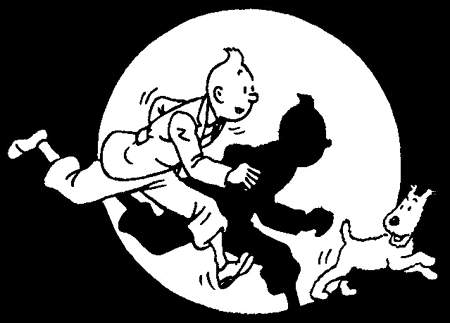
It's Tintin Time!


Originally Appears in Issue 8

Exciting escapades, nail-biting twists, a boy with an unhealthy obsession for his dog; The Adventures of Tintin comic had it all, and now we’ll be seeing our hero hitting the big screens in 3D this October. As kids we read along as Tintin travelled the world in his drive to thwart yet another scheming criminal bastard, assured that no story worthy of the front-page would be kept hidden from this star reporter for long, because Tintin kicked ass and took names.

The new movie looks to be promising with both Steven Spielberg and Peter Jackson behind the project. It gets even better, for the plot synthesises the stories behind three classic Tintin comics: The Crab with the Golden Claws, The Secret of the Unicorn, and Red Rackham’s Treasure.

The brainchild of Georges ‘Hergé’ Remi, a Belgian cartoonist, Tintin has a far darker past than many today realise. Remi, after all, was a well-known fascist sympathiser before and during the Second World War, and held some very controversial views. In 1943, for example, Tintin happily sought out Red Rackham’s Treasure in the pages of Le Soir, a collaborationist newspaper in Nazi-occupied Belgium. Moreover, the new movie opts to skip past the reporter’s trip to Africa where, in Tintin in the Congo, he infamously taught his ignorant colonial subjects about the virtues of their Belgian fatherland.

It is interesting then that Spielberg, of all people, came to arrive at the project. An American Jew and admirer of Remi’s work, the future director of Schindler’s List first came across Tintin’s adventures in the early 1980s, after a movie reviewer compared Raiders of the Lost Ark to one of his comics. Spielberg recognised the cartoonist’s artistic talent and the respect was mutual, according to Michael Farr, an author of several books on Tintin, who wrote that Remi “thought Spielberg was the only person who could ever do Tintin justice”.

It has been nearly three decades since the two men met in 1983 – a mere week before the cartoonist’s death – to discuss a potential movie project. The picture has been a long time coming, and judging by the recent trailer, The Secret of the Unicorn looks to enthral fans young and old – albeit in a politically correct fashion. --Simon Mee

Wednesday, October 12, 2011

Spotlight: Julie Dexter


Originally Appears in Issue 8

There is something about Julie Dexter’s voice. Smooth and slow in pace, but delivered with a playful effervescence, the soul singer lets it gently splash at the end of each sentence, as she bounces from one idea to the next.

We’re speaking over the phone about her fourth album, New Again, a collection of songs fused with a blend of jazz, soul and reggae released in April earlier this year. The English singer, born in Birmingham but now based in Atlanta, Georgia, is full of enthusiasm when talking about her latest effort, describing her music as “jazzy soul, dipped in the roots of reggae”.

Arriving 11 years after her debut, Peace of Mind, the material found on New Again reflects a fresh beginning for Dexter. “This is a whole new phase of my life”, she says. “I just became a mother again. There’s a lot been happening since the last album was released [in 2005]. I’ve gotten married; I’ve had a second child. So you know, it’s just like saying ‘I’m back but I’m new, and there’s a lot of new stuff happening’”.

With lush, indulgent songs such as ‘Sunshine’ and ‘Blue Skies’, New Again is marked from the outset with a confident soulful jazz. Within them, “there’s a sense of a new day, there’s optimism, there’s faith”, the singer says in an accent that now owes as much to the Atlanta sun as the Birmingham rain.

“In terms of putting an album together, sometimes I go by the lyrics, sometimes I go by the music, sometimes the tempo – there are so many things that determine for me the mood of an album, so in this particular instance I definitely viewed [New Again] with a lyrical conscience of sunshine and blue skies”.

Working in tandem with her team of musicians and producers, Dexter created a record she descrines as “a variety of sounds, tempos and what I call backdrops for me to express myself as a singer-songwriter. So, you know, I remember thinking a little bit of dance here, a bit of jazz, a bit of love, a bit of blues”. The result is a self-assured collection of songs.

When Dexter is not recording music and touring, she is busy managing her small music label Ketch A Vibe Records, through which she releases her own material. But, with four albums in, she shows no sign of giving up creating music anytime soon. “It’s been a journey for me”, the singer laughs. --Simon Mee

Thursday, October 6, 2011

Steve Jobs 1955-2011

Image by Tsevis Visual Design

Steve Jobs sadly died yesterday after a long battle with cancer. As a tribute to the visionary inventor we're republishing a piece that ran in Issue 5, originally titled The Exodus of Steve Jobs.
The article looks at how Jobs turned what seemed to be a massive blow to his career into a great opportunity and ends with an important rhetoric from Jobs himself that helps sum him up: "Don't settle".

Laura O’Brien takes a look at how Steve Jobs lost his power at Apple in the eighties and finds out what he did to build himself back up again.

Finding what you want to do for the rest of your life at 20 is lucky. Losing it all at 30 is devastating. This was Apple CEO Steve Jobs’ position in 1985. But what would appear to be a fatal blow to a career turned into great success and opportunity. Without this loss, would Apple, one of the most influential media giants in the world, be what it is today?

In 1981, the Apple corporation was under threat. While the Apple II computer was prosperous, it’s successor, the Apple III, had tanked. Worse still, industry giant IBM had plans to enter the computer market. They needed another winning machine and fast.

The board turned to the company’s cofounder and product inventor, Steve Jobs. After having developed Apple’s previous computers, they hoped he could create another success story for Apple. His newest project idea was Lisa, which used a graphical user interface (GUI) as opposed to a command-line interface. However, tensions were fraught in production, as the team felt that Jobs was a difficult manager to work with. When he was thrown off the project, he sought revenge by taking on another project within Apple known as the Macintosh. He aimed to design it as a cheaper GUI based machine in order to jeopardise Lisa’s sales. It was developed by an impressive team of engineers, invigorated by Jobs, who referred to them as “the pirates” and the rest of the Apple company as “the Navy.”

This rebellion reflected how Steve Jobs carried himself in the office. A former board member, Arthur Rock, recalled his lax office dress to a University of California oral-history project. “Jobs came into the office, as he does now, dressed in Levi’s, but at that time that wasn’t quite the thing to do [...] And I believe he had a goatee and a mustache and long hair--and he had just come back from six months in India with a guru, learning about life. I’m not sure, but it may have been a while since he had a bath.”

In spite of this antagonisation, John Sculley, then CEO of Apple who was hired by Jobs to run the company, heavily promoted the Macintosh. Lisa became a failure, and Apple needed this computer to be successful. Yet, while initial sales were promising, they soon fell. The pressure was mounting and Jobs’ attitude was grating. Sculley had no choice but to remove all managerial authority from him. He remained as a ‘chairman’, a mere ceremonial title.

Steve Jobs was at a loss. Apple had been his entire life and to remove his power was devastating. Yet he still had a passion for computing and began working on a new project known as NeXT, a machine designed for the higher education market. He enlisted the best engineers and sales people from Apple to help him start up this new business.

His employers attempted to sue them, only to see their tactic backfire, as it only bolstered the publicity of NeXT and portrayed Apple as being fearful of competitors. A settlement was quickly reached – NeXT were not allowed compete directly with Apple products and they were required to show the company their new merchandise before they released them to the press.

In the meantime, Jobs began to develop the company, using his unique business style. Their base was designed to be open, spacious and communicative. All employees worked in a common room area, decked out with leather couches and Ansel Adams prints.

Jobs wanted the NeXT machine to be the best it could be, with high quality hardware and the most advanced software. He based the operating system (OS), called NeXTSTEP, on UNIX, the most complex at the time, but added his own GUI for easier use. The product was known as the NeXT Cube and was released in October 1988. Costing $6,500 and reported to have been missing useful software, it did not sell. They attempted to expand its market from just educational purposes and released a cheaper model known as NeXT station, but there was no improvement. By 1993, all of its cofounders left. The company were forced to drop out of the hardware market and focus on niche software.

NeXT was not the only project Jobs undertook. In 1986, he bought the Graphics Group, which was a part of Lucasfilm’s computer graphics department. This team dreamed of making animated features using CGI on machine, initially developed for this purpose, such as the Pixar Image Computer. But with a price of $135,000, very few were sold. They shut down the hardware division, focusing on developing 3D language software called Renderman. It found some success, selling 100,000 licenses and was used by James Cameron for Terminator 2: Judgement Day. Their short animations Luxo Jr and Tin Toy, headed by John Lasseter, earned themselves Oscar nominations. Yet the company was still far from being profitable. All that was about to change.

Lasseter pitched to Disney the idea of developing a Christmas special for them. They were so impressed by their short animations, they asked them to produce three movies. This created a huge re-organisation of the company, devoting much of its resources to animation. The first feature planned was Toy Story. In spite of getting this landmark deal, the pressure was on to succeed. If Jobs funded another failure, he would have been forced to sell Pixar to someone else. Negotiations were tense, due to Jobs and Disney film division head Jeffrey Katzenberg’s fraught relationship. Only months before, Jobs had gotten into a blazing argument with Katzenberg when he tried to sell them some of his NeXT computers. Still, the negotiations went well and the deal was finalised.

The production was not without its problems. 10 months in, the entire film had to be rescripted, as Disney felt that the character of Woody was far too mean. This posed a huge threat to scheduling, but eventually the script was reworked and the film was released in November 1995, right in time for Chrstmas. Jobs was more focused on his NeXT company, but he noticed the hype that Toy Story was getting and saw the opportunity in Pixar once again.

Jobs made Pixar go public the week after the release of Toy Story. The film may have earned $39.1 million on its opening weekend, but Pixar were worth more on the stock market. And with that, Jobs net worth was over $1.5 billion – far greater than it ever was when he was in Apple. The company itself were facing difficulties, thanks to Microsoft’s release of the hugely successful Windows 95. They were losing marketshare and needed a new OS for their hardware. Apple’s newly appointed CEO, Gil Amelio, chose Jobs’ NeXTSTEP OS, paying $400 million for the company. This was used to develop their newer OS and contained many attributes that are still on Macs today, such as the Dock and the Finder browser window.

By 1997, Apple’s losses were huge, so Amelio was removed from the head position. Jobs stepped in as interim CEO and began restructuring the board of directors and entire company line. This lead to him becoming Apple’s full time CEO. Within six months, he released the Power Mac G3 and the Powerbook, which were not only great successes, but had helped the technological community restore its fate in the Apple brand. Not only had Steve Jobs returned to Apple, who had thrown him out years before, but he had regained power of the entire company.

While Steve Jobs initial reaction to his own ousting was despair, in hindsight, he has regarded it as the best thing that has happened to him. “Your work is going to fill a large part of your life, and the only way to be truly satisfied is to do what you believe is great work.” he said at a Commencement address in 2005, “And the only way to do great work is to love what you do. If you haven’t found it yet, keep looking. Don’t settle.”

Thursday, May 19, 2011

Webcrawler

Originally Appears in Issue 6

In each issue Declan Aylward dives head first into the weird and wonderful world of the web, and reports back with his findings.

Echo Bazaar
http://echobazaar.failbettergames.com

Three decades ago, London was stolen by bats. That, intriguingly, is the stage-setter for Echo Bazaar, a ‘10 minutes a session’ browser game that bases itself on your Twitter or Facebook account, but won’t gain you the pitying and vaguely irritated looks a Farmville addiction can bring on from your friends and co-workers. Part of this is because Echo Bazaar keeps its spamming of your friends to a discreet minimum. It’s more a polite cough of an aged butler than a raucous, marketplace screech most of its ilk use to announce their presence. Mostly though, it’s the setting that will get its hooks into you. Set in an underground, alternative world that feels like Neil Gaiman and Terry Gilliam collaborated on a HP Lovecraft theme park under the supervision of Terry Pratchett, the curiously genteel Fallen London is rife with flirtatious devils, melancholy curates and, of course, the mysterious Masters of the Bazaar themselves. The game is essentially card-based and once you’ve been dropped into the Neath you use the opportunity cards you draw to find accommodation, earn what passes for money this close to Hell, uncover hidden plots or even invite your friends to social events in your spiffing new lodgings. The game’s focus on storytelling and intrigue over violence and mayhem has even earned it attention from a mainstream gaming industry fast becoming bored with hulking space marines mowing down hordes of hapless aliens. Pay a visit to the Bazaar and, who knows, you might even hang up the blaster rifle yourself in favour of an expertly wielded bag of fierce mint humbugs!

Smodcast
http://www.smodcast.com

Has anyone else been wondering what Kevin Smith is up to these days? Well, apart from writing and directing a pretty creepy looking horror movie called Red State, he has been hiding out at a place called Smodcastle. Billing itself as the world’s first and only podcasting theatre, Smodcastle is Smith’s LA venue for a whole host of internet events that those of us too pasty and freckled to spend time in the City of Angels can catch at smodcast.com. Every day of the week a new podcast is available on the site. Some are recorded live at Smodcastle, some rare ecorded studio-style off the premise. But all are hilarious, interesting and, needless to say, very offensive to the lemonade-and-buns brigade.

The podcasts on offer cover a host of topics, but whether you’re listening to Kevin Smith and Scott Mosier shooting the shit in the titular Smodcast, catching up with movie industry news in ‘Hollywood Babble-On’ or indulging an inexplicable ice-hockey fascination with Puck Nuts, the banter will have you chuckling to yourself like a crazy person on the bus. If you really crave your Jay and Silent Bob fix, every Wednesday ‘Jay and Silent Bob Get Old’ gives you a chance to hear about how our heroes are doing now that they are both settling down and maturing. Mature is a relative term though, and anyone who doesn’t find endless, graphic dick jokes entertaining should really pass this site by and renew their subscription to Justin Bieber’s no-doubt squeaky clean podcast instead.

Mystery Solved!
http://www.mysterysolvedcomic.com

He may not have a psychedelic van and a talking great dane, but Colonel Randall Thaddeus Winchester IV of the Mystery Solved! webcomic certainly gets the job done. Created by Zack Kruse and drawn by a different artist for each of his adventures, the good Colonel and his trusty manservant Jenkins travel the globe investigating and disproving phenomena like alien cattle mutilation, bigfoot and fairies. The comic delights in showing the wilful ignorance that must persist for most myths to survive, and contrasts this with the Colonel’s sound science. I would be lying if I said that sharing a smug sense of superiority with our intrepid investigator wasn’t part of the appeal. The fact that each adventure is illustrated in a different style keeps the comic fresh. It’s fun to watch how far in the air each artist manages to stick Jenkins’ nose, but the wacky, almost Beano style writing maintains a firmly consistent feel. While it might not have the cutting edge satire of Penny Arcade or the relevance to modern singletons that Girls with Slingshots has mastered, Mystery Solved! is a reminder that sometimes it’s nice just to settle back for a simple Scooby Doo style adventure and a pat on the back to ourselves for never believing in ghost stories in the first place. The comic is updated every Thursday so check back regularly to keep abreast of the Colonel’s most recent debunking.

Thursday, April 21, 2011

Goldrush


Originally Appears in Issue 6

Rubicon, a critically acclaimed conspiracy-thriller, is set to debut this year on BBC4. However, disappointing US ratings mean the show won’t be coming back for a second season. Derek Owens laments how TV drama is under threat as networks join the rush for instant hits.

Perhaps appropriately for a show with more moments of subdued tension than gunshots or explosions, Rubicon died with a whimper: a statement from its network, AMC TV, praised the story of a defence analyst who discovers a sinister conspiracy involving his employers, API, but confirmed that the programme would not return with a second series. The news wasn’t particularly surprising. The show had been troublesome to produce – original creator and show runner Jason Horwitch was replaced in mid-production by Henry Bromell – and ratings hadn’t been spectacular. Still, the cancellation of the critically-acclaimed show after a single series is a worrying sign of a short-termism that’s crept again into the decision making of American network execs. Even as, officially, we still enjoy a golden age of TV drama, the desperation to achieve instant success in the hyper-competitive environment could yet kill it off.

Few would claim, of course, that Rubicon was a perfect show. The series lead, Will Travers (The Pacific’s James Badge Dale), reacted to learning of a terrifying conspiracy with the passive befuddlement of a man trying to locate his car keys. The script had the occasional lines of exposition and import that just didn’t come off naturally, and the occasionally head-scratching plot point – this was probably inevitable in any conspiracy thriller cut short.

However, Rubicon was a show with real promise. Horwitch and Bromell borrowed more than just a bag of themes from classic seventies paranoia films like Three Days of the Condor, All the Presidents Men and The Conversation – they lifted the hybrid of intimate camera-work, a minor key tension-building soundtrack and slow building of tension to create a real throwback to these demanding but deeply satisfying stories. They also brought in some extraordinary actors, including stage veteran Michael Ivan Cristofer (whose ‘villain’ Truxton Spangler is visceral, peculiar, and wonderfully complex) and lesser-known talents like Jessica Collins and Dallas Roberts as Will Travers’ deeply troubled colleagues.

More importantly, the show had started to really find its feet in later episodes, branching into the private lives and troubles of Will Travers’ colleagues. Issues of power and its abuse were being teased out. And something actually got blown up. Oddly, but entirely in keeping with the programme’s personality, the big explosion happened off-screen, in the penultimate episode – a substantial ratings drop for the finale a week later probably sealed Rubicon’s fate. Even as critics praised the show for its uniqueness, visual brilliance and strong finish, most acknowledged that a second series was highly unlikely.

Rubicon, however, wasn’t the only highly-regarded show this year to be culled from the broadcast schedules after failing to achieve instant, Mad Men-esque success: Terriers, a tale of two private detectives scratching out a living, was also ditched by FX after only one season, while Fox’s Lone Star (an intriguing series about a Texan con-man struggling to keep his double life together) gave up the ghost after only two poorly-rated episodes. The fact that the show was in the same timeslot as NBC’s The Event, Dancing with the Stars and CBS’ inexplicably successful Two and a Half Men probably doomed it from the start.

Fierce competition is, frankly, killing new shows: at the height of the US’s autumn season, 16 new shows premiered in one week – when season premieres of existing shows were taken into account, nearly 50 new episodes were battling for eyeballs on the major American networks. The powers that be in TV land are responding to – and feeding – this glut in one of three ways. Some are sticking to tried and tested shows, however critically reviled and problematic they may be to make (the aforementioned Two and a Half Men, though its continuation since axing Charlie Sheen is yet to be confirmed). Some, like AMC, are chucking short runs of oddball shows at the wall and hoping that they stick – after Rubicon finished up, the network had a hit with post-apocalyptic zombie thriller The Walking Dead. Meanwhile, others are committing to shows with mind-blowing budgets and A-list talent in the hope of outgunning the opposition: Boardwalk Empire, HBO’s Scorsese-produced, award friendly period gangster piece springs to mind.

However, networks following that third path are in the minority, and there was even some doubt about whether HBO would bring Boardwalk Empire back for a second season: with the market for high quality TV as competitive as it is, it appears, executives don’t have the luxury of waiting for secondary characters on a show to come into their own and connect with viewers, or for a show to find its feet after tweaking its formula. This is understandable, but lamentable. After all, would The Wire have become a seminal show if we hadn’t been allowed to emotionally invest in Omar (or indeed any character besides Jimmy McNulty) by a network that believed in the series enough to renew it despite middling ratings? And indeed, had Fox not allowed Matt Groening to switch the focus of The Simpsons from Bart to Homer, the programme wouldn’t have become half as successful as it did. These are, of course, radically different shows, but they illustrate a core truth – few programmes, if any, get it right immediately. They need time to bed down and refine their formula, but the current environment means that only exceptionally strong-willed executives will give a series that breathing space if it hasn’t been an instant hit.

This changing environment probably won’t result in the deluge of TV offal that some critics fear. Of course, we’ll still have shows like Two and a Half Men, but many networks will continue to commission innovative shows in the hope of unearthing another Mad Men. The downside is that, unless the quirky show that captures your heart is an instant hit, you’ll probably have to content yourself with a single series, a topic to bore people silly about, and a dream of how good the programme could have become if networks had a bit more backbone.

Wednesday, February 2, 2011

Who’s Afraid of the Goddamn Batman!?


Originally Appears in Issue 5

With Frank Miller finally returning to complete the story he began five years ago in All Start Batman and Robin the Boy Wonder, Dean Van Nguyen believes this is a perfect time to revisit the unfairly derided title.

This February Frank Miller returns to the Batman franchise to finally complete a story arc he began way back in 2005. Running for six issues, Dark Knight: Boy Wonder will pick up the tale that began as All Star Batman and Robin the Boy Wonder, which ran for 10 issues over the course of three very uneasy years for Miller.

The series was a part of DC’s All Star imprint, where some of the company’s most iconic characters get re-imagined by acclaimed writers and artists outside the continuities of their regular series. By working on a new Batman title, Miller was re-entering a world that helped make his name, with his previously written story arcs, particularly The Dark Knight Returns and Batman: Year One, among the most highly regarded the series ever produced.

However, the project became deeply troubled. Issues were often months late, dropping at seemingly random times, ignoring all scheduled release dates. “Frank and I sat down just recently to have a long talk about how best to finish this very ‘deadline challenged’ project and give the loyal fans the second part of this epic storyline they have been patiently waiting for,” said Jim Lee, the artist on the series. “I feel terrible about how late [All Star Batman and Robin the Boy Wonder] fell behind. 100 percent of the blame falls upon my shoulders, so one of the reasons we chose the February, 2011, start date was to ensure that Dark Knight: Boy Wonder would ship regularly and on-time.”

He might be taking the blame for the delays, but many readers felt that Lee’s artwork that was the series’ only redeeming quality, with Miller’s vision of Batman being met with widespread disdain as he recreated the character as a vengeful, cruel and often sadistic anti-hero. The story revolves around Dick Grayson’s evolution into Robin. When his parents are violently murdered in front of his eyes, Grayson is kidnapped by Batman, who sees the boy as a potential protégée. Miller’s Batman, scripted as 24 years-old, is callous and cruel in his treatment of Grayson, even slapping him in the face to stop his tears.

Fans frustration with the series seemed to be summed up by one line. Appearing in issue two, it has become the most infamous scripted pieces of dialogue in recent comic history. Introducing himself to Grayson as “the Goddamn Batman”, the line (repeated throughout the series) has become the definitive example of Miller’s heavy-handed dialogue, and perceived mismanagement of the Batman legacy. But perhaps those who deride the series have missed the point.

While “I’m the Goddamn Batman” is not the most outstanding piece of writing ever penned, by and large Miller recreates complex characters, offering clear windows into their broken personalities. His insights into why this Batman is so ruthless are fascinating. Soaked in his victim’s blood, the Dark Knight often muses on the pain he’s inflicted. He takes pleasure in this brutality, going as far as breaking a rapists arm in such a fashion that it will never heal correctly. “You’ll remember me every time the air goes wet and cold. Arthritis punk. It’ll hurt like hell.” This is not a Batman that rubs shoulders with the authorities in hope of fashioning a less corrupt Gotham. He’s a hardened vigilante, convinced the system is irreparably broken.

Seeing as the point of the Allstar series was to give proven writers the space to take a fresh approach on well established characters, it seems strange Miller and Lee’s series was met with such negativity. This is a well-executed, fascinatingly dark rendition of a character never known for being cutesy.

Wednesday, January 12, 2011

Have You Seen It? #2: The Other Guys (2010)


Originally Appears in Issue 5. Out Now on DVD.

The Other Guys is yet another solid instalment in the long running series of films where Will Ferrell has some amusing occupation. This one however is elevated beyond the Semi Pro’s of the world due to the presence of Mark Wahlberg. Both play detectives, Ferrell as a pencil-pushing desk jockey and Wahlberg as his tough-as-nails but emotionally fragile partner.

Playing the role 100% straight, Wahlburg acts as a perfect foil for Ferrell’s madcap antics, with many of the film’s comedic high points involving his general bewilderment towards his oafish partners actions. Add to this a supporting cast that features Samuel L. Jackson, Dwayne Johnson and a criminally underused Michael Keaton, and The Other Guys has all the ingredients in place. To its credit, the film succeeds for the first hour, with wall-to-wall one-liners and the usual Will Ferrell buffoonery to keep the fans appeased. There is some vague story behind the laughs which has something to do with Steve Coogan and money or something, but it’s just a tool to get our heroes into more turmoil

The director, Adam McKay who has directed several Ferrell hits, shows a surprising flair for action with several superb set pieces littered throughout the film. But his combination of action and comedy sadly falls short in the film’s second half, when it simply runs out of steam. It’s a shame, because everyone involved is on top form and the film, which could have been have been Anchorman good, just ends up being good. --Jesse Melia

Monday, December 6, 2010

Tapes 'n' Tapes


Originally Appears in Issue 5

As the era of downloading only continues to advance, Niamh King looks at how one Brooklyn Record label takes a stand in the name of nostalgia.

Remember the days of hearing a song on the radio, but not knowing what it was? Loving it so much, but never being able to find it again? The excitement you felt when you did hear it again, like meeting up with a friend you hadn’t seen in years. Wanting to share that song with every single person on the planet, because the three minutes spent listening to it were three minutes of sheer perfection. Today when you hear a song you like, you note the lyrics, go home, search, download and, after a few days, can’t bear to listen to the song one more time, never mind share it with anyone. Perfectly manufactured recordings of new “it” artists are passed from person to person in minutes. Within the space of a week they’ve exploded, become part of the zeitgeist, filtered out and eventually are strictly verboten, done, kaput.

This level of instant gratification represents everything that is both right and wrong with the music industry today. More new artists are getting noticed than ever before. But the wide availability of EPs and the readiness at which they are obtainable has destroyed the romance, the indescribable messiness that a love of music used to mean.

Jeremy Earl is the man behind the retro, Brooklyn based, Woodsist Records, a label focused on the distribution of artists recorded on vinyls and cassettes (or in the case of sister label; Fuck It Tapes, exclusively cassettes). To term the label ‘grassroots’ would truly not do it justice. Beginning with just one act (Earls’ own band Woods) Woodsist has grown, acquiring new and eclectic artists as it goes. The home grown feel is only enhanced, as Earl says there are no contracts, only “friendly handshake deals,”.

The sound of a Woodsist record, or alternatively a Woodsist live show, is that of the indistinct fuzziness of mix tapes and nostalgia. Almost like recording a song off the radio, because that was the only way you were going to get your hands on it. Each artist signed to this unique label has the feel of being handpicked and deliberated over. In reality Earls says he signs “whatever bands I’m digging,” at the time. Together artists such as Real Estate, Psychedelic Horseshit and, of course, Woods, gives the label an undeniably diverse sound, ranging from noise pop, to garage rock, to lo-fi and punk.

The modus operandi of Woodsist is, indisputably, a genuine love of music, of any genre. The retro vibe of vinyls and cassettes isn’t about hitting the Hipster trend at its peak, but about genuinely trying to give the world great music in any way that is possible for those involved, the music that people love to hear and love to play, without it being contrived.

Monday, October 25, 2010

'Why Can't We All Get Along' by Coppercab

Originally appears in Issue 5


As we know, the internet has given everyone a voice, and while most choose to use this voice for less noble pursuits, one man is using his to scream and shout for gingers everywhere. A bona fide YouTube sensation, Michael AKA CopperCab is 18 years old, christian, ginger and with serious anger management issues. His first video entitled ‘Gingers Do Have Souls’ was a desperate plee to his peers - and the rest of the world - to stop their persecution of red haired people, sprinkled with vicious, unpredictable and often disturbing yelps at his handheld camera. First appearing eight months ago, he’s continued his viral onslought, targetting M.I.A, South Park (who even parodied him in an advert) and his friends and classmates who continue to ridicule him.

While the debate rages on whether CopperCab is actually real, or just some expertly executed comedic hoax, his most recent video will either give doubters extra ammunition, or serve as further evidence that Michael has a slipperly grip on reality. An original compisition, ‘Why Can’t We All Just Get Along’ sees him spreading his message, not though anger and frustration, but through song. “I just want to know why this world can’t go on” he tunelessly croons acapella. A comic masterpiece, or one young man’s descent into mental illness, this is pure car crash viewing. --Dean Van Nguyen

Sunday, October 17, 2010

Webcrawler


Originally Appears in Issue 5

In each issue Declan Aylward dives head first into the weird and wonderful world of the web, and reports back with his findings.

Geek Food

http://geekfood.frogpants.com

A show about cooking for geeks? But that’s just frozen pizzas and Meanies right? Not according to Scott and Kim Johnson, presenters of the revamped Geek Food podcast. The geek in question is definitely Scott, who asks the dumb questions we are all thinking while Kim does the actual cooking. There’s a bit of an American focus, with lots of stuff coming from Costco, but Tesco probably works as a substitute on this side of the pond.

Now presented in glorious video, as opposed to its humble beginnings as a painfully hard to follow audio podcast, Geek Food has joined the proud ranks of the FrogPants network, bringing it to a whole new audience of vitamin starved geeks. So check out their site on FrogPants or subscribe via iTunes and you’ll never be stuck for munchies during a Buffy the Vampire Slayer marathon again.

The MMOrgue
http://mmorgue.com

Everybody and their grandmother has a World of Warcraft account at this stage and massively multiplayer online games are starting to edge away from the neckbeard and glasses market towards a more mainstream demographic. That’s why it’s so great to find a site like the MMOrgue, to remind us all that no matter how many beer swilling Halo jocks create a Death Knight named TeabAgGer_09 and bunny hop their way through Azeroth, there are always a group of hardcore nerds prepared to wax lyrical on the in-depth minutiae of the game and the industry.

The MMOrgue’s writers are actual gamers, which makes it a great source of unbiased news about the MMO scene; since most of the news about any particular game comes directly from the developing company and its lackeys, making it about as trustworthy as a shifty eyed fox in a dirty mackintosh. Articles are well written, without any of the flame and fearmongering of gamer message boards, and show a pretty impressive level of knowledge about the inner workings of the gaming industry, so the MMOrgue can fast become your way to sound more knowledgeable about a topic not that many people care about.

PATV
http://www.penny-arcade.com/patv

If you have ever played a video game and don’t know who Mike Krahulik and Jerry Holkins are, then you have officially failed at the Internet. Never fear though citizen, One More Robot knows and is here to drag you kicking and screaming into the light. The two genius creators of the Penny Arcade webcomic and founders of PAX, one of the biggest gaming conventions in the United States, have become something of an institution in the gaming world, a fact that has become even more noticeable with the launch of their internet ‘television station’, PATV. The flagship show, Penny Arcade: The Series is that rare beast: a reality television show that doesn’t suck. In truth it’s more of a fly-on-the-wall documentary about the people at Penny Arcade and manages to be funny and sweet without making anybody want to vomit. Blamimation is the only other show currently running. It’s a series of animated shorts that will make any game fan laugh out loud. Scott Kurtz and Kris Straub won a Richter Award for the series but it hasn’t gone to their heads and the humour is self defacing and cheerily caustic.

Wednesday, September 22, 2010

8-Bit Blips


Laura O'Brien's article '8-Bit Blips' that first appeared in issue 4 is now available via her portfolio website.

Nostalgia makes everything beautiful. It doesn’t matter how tough times were, you can always recollect moments of childhood bliss. Any owner of a videogame console can attest to this, be it creating something wonderful on your ZX Spectrum, reaching that giant pill and turning the tables on your ghostly nemeses or showing Bowser what-for and saving the elusive princess. Today’s games may have awe-inspiring visuals, well written plotlines and more intricate levels of gameplay, but the games of yesterday had a certain charm about them that is hard to let go of. So much so that a whole generation of musicians, artists and filmmakers have drawn inspiration from the videogames they played as youths.

Click to continue reading...

Wednesday, August 4, 2010

Acoustic Gold


Chris Familton's article Acoustic Gold from Issue 3 is now available via his blog Doubtful Sounds.


Unlike many other musical trends and genres, folk music never disappears and new artists are consistently emerging. Chris Familton discusses the history of the genre and why it never goes out of fashion…

You may not find many hardcore hip hop fans listening to folk music, or vice versa, but the connections between the two genres are closer than most people would think. The reality is that folk has been as cutting edge a musical medium as hip hop and in its heyday, the blues.

Click to continue reading...

Tuesday, July 20, 2010

Web Picks


Originally Appears in Issue 4

Declan Aylward is back with three more fantastic web sites for you to browse, proving once and for all he has infinitely more free time than you do.

I Hit It With My Axe

http://www.escapistmagazine.com/videos/view/i-hit-it-with-my-axe

Porn stars, everybody likes porn stars; and Dungeons & Dragons, well, some people like that…mostly the same people that are big fans of porn stars.

That was probably the thinking behind Zak Sabbath’s latest idea I Hit It With My Axe. It’s a reality TV style web series debuting on The Escapist that follows the adventures of adult film stars Kimberley Kane, Satine Phoenix and Mandy Morbid, as well as an assortment of strippers, hair dressers and tattoos through their trials in D&D. The series features Zak Sabbath as the dungeon master and uses his special, rules-light version of the game, so it’s not too hard to follow for those of us who don’t have a maths degree or our own replica of the One Ring. D&D podcasts are all over the web, but very few offer any view of the action, and although the edited, reality TV style of the show breaks the flow a little, the visuals are well worth it. There’s also a lot of enjoyment in seeing stars we are more familiar with rolling around on each other rolling some dice instead. If you’re not familiar with the work of these talented young ladies, One More Robot knows you’ll google them right after reading this with all the privacy settings on your browser set to ‘wank’.

WWdN: In Exile

http://wilwheaton.typepad.com

Remember Wil Wheaton? That skinny little kid in the grey jumpsuit that pissed us all off so much in Star Trek: The Next Generation as Wesley Crusher? Well he’s got himself a blog, and quite a successful one too, if the nerdvine is to be believed. Wil Wheaton Dot Net: In Exile has existed at its current location for a while now, ever since an attempt to upgrade, a buggy program and an innocent reader leaving a comment conspired to work the blog’s last location into such a knot it would drive Popeye the Sailor to hard drugs. It may not seem like the most enticing option in the world, to read the scribblings of a guy who was the epitome of uncool in the 1980s, but grown up Wil really is worth giving a chance. He is still the epitome of uncool, of course, but a very witty and entertaining epitome, for all that.

The blog covers everything and anything, from musings on his past as a ‘teen heart throb’ (sniggers all round on that one) and updates on his current projects like The Big Bang Theory and Eureka to more esoteric ramblings about his all consuming love of certain Linux platforms. There is a charm about his writing, a sort of honest lack of self possession that makes you actually give a shit about the little stories in his life that he shares and that keeps you coming back for more. Oh, and he hates Wesley Crusher too!

The Guild

http://www.watchtheguild.com

One of the best things about the internet is how much power it puts into the hands of ordinary people; its ability to cut through the corporate structure that has grown up around so much of our entertainment media. Felicia Day’s sitcom web series about a group of social misfits whose only connection with each other is an online game makes for a fantastic example. The show began in 2007 and its first season was financed solely through PayPal donations made by viewers, with a tally on the website showing how much they needed to raise to make the next episode. The Guild is now into its third season and has had corporate sponsorship for a while now, but the do-it-yourself attitude and feel of the series has survived. The lovely Ms. Day, whose beauty famously inspired Penny Arcade’s Tycho to groom her like a unicorn, stars in the show as the healer Codex as well as writing the 3 to 8 minute long episodes. Visit the official website or check out iTunes or Xbox Live to follow the Knights of Good through their first real life meeting with each other, a romantic entanglement brought about by chronic misuse of emotes and other adventures of the socially inept.

Sunday, July 11, 2010

Spotlight: Das Racist

Originally appears in Issue 4

Hyperbolic statements concerning the death of Hip-Hop come around every once in a while. Many fans bemoan the demise of any kind of postive thinking in the genre and those who consider themselves ‘right-minded rappers’ get overly concerned about who is and who isn’t a “real MC”. But don’t fret. Hip-Hop is still alive and well, and these complaints only belies the guilt of the genre to take itself a little too seriously sometimes. This is something Brooklyn-based absurdist rappers Das Racist can hardly be accused of. Consisting of MCs Victor Vasquez and Himanshu Suri (Hima), the group is completed by Ashok Kondabolu (Dap), who they describe as their “hype man and spiritual advisor”.

So “Das Racist” is it? Question number one had to be where the name came from? “We got it from an online Wu-Tang name generator,” says Vasquez. “My grandmother came up with it. She’s a huge (Rap duo) Das EFX fan,” contradicts Hima. Both of these might be partially true, but based on their penchant for nonsense, we best take their explanations with a grain of salt.

Das Racist gained attention last year when their track ‘Combination Pizza Hut and Taco Bell’ went viral, despite consisting almost entirely of the lyrics “I’m at the Pizza Hut/ I’m at the Taco Bell/ I’m at the Combination Pizza Hut and Taco Bell”. Called by New York’s Death and Taxes magazine “both feverishly juvenile and somehow profound” at the time, the song was quite divisive, irritating plenty of people, and found the group collecting labels like “dumb” and “joke-rap”.“I hope the 16 other songs on the mixtape aid people in their perception of us,” says Hima.

The mixtape in question, Shut Up, Dude, is their first and was released in March for free on their website. The tape displays an amalgamation of different styles, leaning heavily on various iterations of Electronica, Dub, Reggae, Dubstep, Jazz and Soul sampling, and Bhangra. Of the lyrical content Hima summarises, “We use humour and poetic devices like repetition to talk about mundane things like food and things that upset or freak us out.” Their stream of consciousness flow hops from one unrelated topic to the next, and it may seem that there’s no point to the absurdity of certain tracks, until you realise that is the point. “I majored in Non-sequiturs and (anti-art movement) Dadaism in college” explains Vasquez. The range of lyrical topics and musical styles is also no surprise given their disparate inspirations – everyone from MF Doom to Sun Ra to the painter Basquiat and novelist Salman Rushdie. Though Hima concedes his real inspiration, “I decided to make music and rap so people would think I was really cool and like me.”

So what’s next for Das Racist? “We’re talking with a couple different labels. We’re still trying to figure out a tour. We’re learning how to build explosives with household items,” claims Vasquez. Fair enough, anything to add Hima? “This interview is a pipe bomb.” What an absurd thing to say. -- Stephen Rogers

Wednesday, April 28, 2010

Web Picks


Originally Appears in Issue 3

Declan Aylward
is back with three more fantastic web sites for you to browse, proving once and for all he has infinitely more free time than you do.

Hober Thinking Radio
http://hober.com/

While not technically a time-waster, Hober is one of those great web sites that makes any long day go by that much quicker. It seems like there are more and more internet radio stations every time you open up your browser, and more and more of them blasting out the same emo ridiculousness or mass-marketed advertising jingles dressed up as pop songs. Hober is, as the name suggests, music for the thinking web junkie. Broadcast from the city of Takoma Park in Maryland, close to Washington D.C., Hober’s dominant genres are ‘folk and ethnic’ according to their site; about as vague a description as you could hope to get really. Everything from down home blues to some very strange traditional styles from various parts of the world raise their heads for your aural pleasure. Most importantly though, Hober wants you to think, so fire up your iTunes or point Windows Media Player at Takoma Park, pull your rocking chair onto the front porch and prepare for some intellectual musical adventures.

Dead Days
http://www.deaddays.net

Oh great, another web comic about what it’s like to be a college student in America, we can never have enough of those! But hey, hypothetical contrary person, give Dead Days a chance and quit being so negative, you douche. Dead Days did indeed start out as your run of the mill three panel sequential comic printed in a college newspaper about topics close to the heart of every student, namely Xbox, alcohol and a distinct lack of housework. Since then, creator John Rios has left college for the working world, but his nameless protagonists have remained the perpetual students most of us wish we could be. Their adventures range from the wacky to the ridiculous, but it is Rios’ charmingly exuberant style combined with an ability to give a line drawing’s expression more depths of resignation and world weary cynicism than Tom Waits at the bottom of a bottle of whiskey that makes Dead Days stand out from the crowd. The comic was recently slated on the Webcomic Beacon Podcast for Rios’ refusal to use colour, but if you can overcome that prejudice then Dead Days could well help you pass the time while you’re supposed to be doing something much more important. You can even use the shout box to annoy John himself with your opinions on the comic in a very accessible back-and-forth which he seems to pay a lot of attention to.

Major Spoilers
http://www.majorspoilers.com

So you think you’re a nerd? Think again my friend; you ain’t got nothing on the boys from Major Spoilers. The site started in July of 2006 as a way for founder Stephen Schleicher and the rest of the team to bring to the internet news, reviews and interviews about comics, science fiction and other things to make anybody who owns their own Star Trek uniform drool. As well as countless review articles, one of the site’s best loved features is the weekly Major Spoilers podcast. Here, Stephen and his buddies Rodrigo and Matthew discuss, bicker and generally wax lyrical about the latest comics releases, DVDs, other people’s podcasts or even wage philosophical debates over the origin of humanity’s great cultural and religious legends and how they relate to Spiderman. There are plenty of podcasts to be found in the site’s archives and, if everything above didn’t seem quite nerdy enough for you, you can even tune in once a week to follow Critical Hit, the gang’s own Dungeons and Dragons campaign put online for your listening pleasure. Just don’t let your boss hear you chuckling into your monitor or he might ask to get involved.